
Imagine a gate that never gets tired, never looks away, and never lets a car through without checking it first. That’s what a good entry barrier does for a property.
Offices, factories, malls, and housing societies all face the same problem. Too many vehicles come and go every day to check each one by hand. A guard can only do so much on their own.
This is where automated gate barriers help. Let’s look at how they actually work, and why they matter.
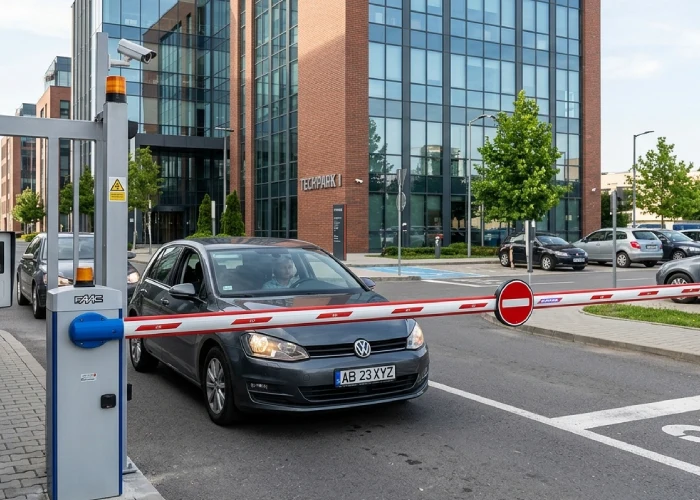
It’s a motorized arm fixed at a gate. The arm lifts to let a vehicle in and drops to block the way. A motor does the work, so no one has to lift it by hand.
The gate opens using simple triggers, such as:
Once the system checks the vehicle, the arm lifts. Once the car passes, it drops again. This happens hundreds of times a day at busy sites.
A guard can miss things. They get busy, tired, or distracted during a rush hour. A barrier doesn’t have that problem. Every vehicle has to stop at the gate. The system checks it before the arm lifts. No car slips through unnoticed.
Basic barriers open with just a remote press. Better systems use a camera that reads number plates and checks them against an approved list.
This helps a lot at busy sites, such as:
A guard can’t memorize every approved plate. A camera never forgets one.
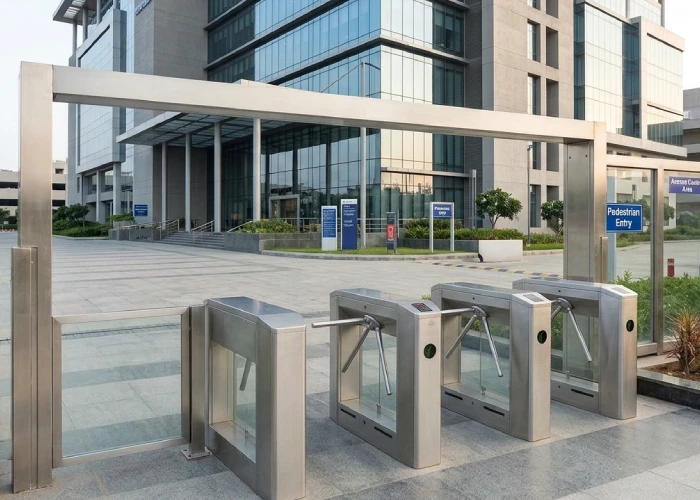
A vehicle barrier only checks cars. People walking through the same gate need their own checkpoint too.
That’s why many sites add tripod turnstiles next to the vehicle barrier. A person has to badge in before the arm turns, just like a car does at the barrier.
Together, they give full pedestrian access control and vehicle control at one entry point.
A gate is only as secure as its weakest entry point. Skipping foot traffic control leaves an easy gap right next to a well-guarded vehicle gate.
This trick is called tailgating. An unwanted car follows closely behind an approved one and slips in before the arm closes.
It happens more often than most people think. Sensors on the road can catch a second vehicle trying to pass. The system then holds the arm down or sends an alert.
A guard checking cars by hand can only move so fast. Traffic builds up during busy hours. A barrier checks each car in a second or two, even during rush hour.
This doesn’t remove your guards. It changes their job. Instead of checking every car, they now watch for anything the system flags.
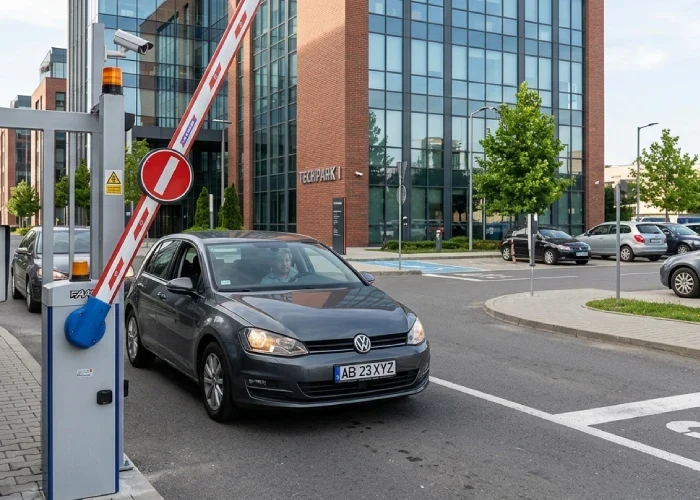
Most vehicle gate access control systems connect to an app or a control room. A manager can:
For sites with more than one gate, this means one person can manage all of them. No need for a guard at every entrance.
Automated gate barriers don’t just look like an upgrade. They change how a property handles security every single day. They check every vehicle the same way, every time, without getting tired.
Pair an automatic boom barrier with number plate cameras for cars and turnstiles for people, and you’ve covered the two biggest entry risks any property faces.
Start with your busiest gate first. That’s where a manual checkpoint struggles the most, and where automation makes the fastest, clearest difference.
Want to make your property safer? Get in touch with ASSIPL to find the right gate barrier setup for your space.
Copyright © 2026 ASSIPL. All Rights Reserved. Developed by Auro Creative Studio.